
Western companies moving into China usually did so through equity joint ventures, which were the predominant entry mode at least until China’s entry into the WTO in 2001 (Kasperk et al. 2011). This entry mode also facilitates the development of personal relationships or ‘guanxi‘ which is of great importance in conducting business in China.
Profit, loss, and risk are shared to the contribution of registered capital of the joint venture partners. “Those have been the premise for foreign car makers to participate in the market, while at the same time supporting Chinese companies with technology and process-knowledge transfer†(Drauz 2012). The contract is set up in both, English and Chinese, equally being valid in accordance with the Law of the People’s Republic of China on Sino-Foreign Equity Joint Ventures. Herein the parties, the nature of business, as well as the nature of investment are detailed.
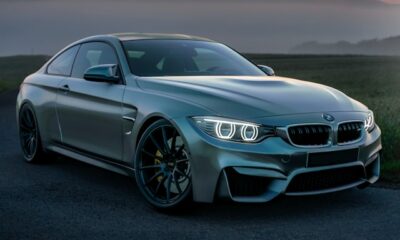
The Chinese-German 50:50 partners BMW and Brilliance are a typical example
To discover the structure and contents we take a look at the joint venture (JV) contract of the establishment of BMW Brilliance Automotive Limited (BBA)Â
 on 27/03/2003. The JV partners are BMW Holding BV (BMW), a 100 percent subsidiary of BMW AG which is located in the Netherlands and the Shenyang JinBei Automotive Industry Holdings Company Limited (BRILLIANCE) located in China, both holding a 50 percent stake.
The BRILLIANCE stake again is taken by Brilliance China Automotive Holdings Limited holding 40.5 percent stake and the Shenyang municipal government holding 9.5 percent stake (The Economic Times 2003). The Chinese-German 50:50 partners both agreed to initially invest 450 million Euro by 2005 with registered capital of 150 million Euros which was later increased. The company today is highly successful with a net profit increase of 92 percent from 2010 to 2011, where it had achieved over 1,720 million RMB with 108,189 cars sold compared to 70,488 cars in 2010.
Established in 2003, the JV currently produces three models
BBA is located in Shenyang. Established as a production and sales joint venture it strengthened BMW’s international presence with the Shenyang plant officially opened in May 2004, a second plant was opened in May 2012. Already in 2003 the 3 and 5 series were produced locally in one variant each, soon to be followed by further engine variants. From 2006 on, the 5 series was produced as long wheelbase variant, which is also the case for the 3 series since 2012. In addition the BMW X1 is produced locally nowadays.
The contract shows clear definitions and future perspectives for the JV
After the partners general terms and demarcations from any other business activities are defined in the first paragraphs of an JV contract, the concrete JV products are clarified. Those were in the contract of BBA initally 6 engine-variants of the 3-series and 5 engine-variants of the 5-series and at the start 30,000 passenger cars in total. At the same time the contract holds the option to add additional products as well. The usage of the BMW logo is regulated and could potentially end the use of the logo if the JV is terminated. Also the possibility to establish international branches and the creation of a distribution and sales branch in Beijing was already regulated.
The purpose of the JV is stated as “…to use efficient and advanced technology and management, production and distribution techniques to manufacture and sell the JV Products, to secure the quality, the value and competitiveness of such products, and to obtain satisfactory economic benefits for the Parties†(BBA 2003). The business scope herein is framed with the production of “BMW passenger cars, engines, parts and components, and accessories therefore; to sell the products produced by itself; and to provide after-sales services (including spare parts) in connection with its products†(BBA 2003).
A financial plan is set up in the initial business case for the years 2003 to 2010, renewed for a six-year period every year. A management by deviation approach is followed with benchmark figures set for the budget and a accepted difference of 15 percent and for the return on sales five percent.
The board of directors is appointed equally
The board of directors of BBA was initially composed of 13 directors, six appointed by the two parties and one “independent Director first nominated by BMW and then mutually appointed by the Parties†(BBA 2003). After three years the board of directors was already in the JV contract agreed to be reduced to 7 directors, each party appointing three of them and one independent one, not employed by BMW. In case the contribution of the parties to the JV changes the number of directors is assigned accordingly.
The JV’s general manager reports to the board of directors on a bi-annual basis and as deemed appropriate. Content of such reportings are the performance of the JV, it’s financial condition, major dealings and transactions, problems and important matters materially affecting the business, and the budget. Typically for an JV, also in the case of BBA the Chairman of the Board is appointed by Brilliance, whereas the Vice-Chairman is appointed by BMW. Both have a thee year appointment with possibilities to reappoint.
The management organization is divided by functions with the general manager nominated by BMW
General Manager as well as the Deputy General Managers for the departments Sales and Manufacturing are nominated by BMW and then appointed by the board, as is common in foreign-sino joint ventures
The Deputy General Manager for the department of Finance is nominated by Brilliance. For Human Resources the nomination is done by both, BMW and Brilliance. Pre-conditions for all appointed persons include excellent professional qualifications, substantial experience in their field, and strong capability in English language, as the working language of the JV is English at least at a senior corporate level.
Brilliance assists the JV with their market knowledge while BMW assists with technology
Brilliance assists the JV to apply for loans, localize the product, procure fiscal, administrative, customs, and tax-related services, recruitment, and transportation of imported equipment. Also the procurement of the site as well as infrastructural necessities lies at Brilliance being the partner with strong China-knowledge and the needed relations to facilitate those issues. Furthermore the market knowledge helps to assist the JV in installing expatriates with the required legal necessities and to support the foreign employees to settle down within China.
BMW assists with the purchasing of material and equipment, training of employees, qualified personnel, localized parts and components development, and the availability of JV products. Therewith BMW exchanges the access to the most prosperous automobile market in the world against technology, process, and management knowledge (Kasperk et al. 2011).
Responsibility in accordance with the named assistance areas lies at Brilliance for the set up of the production site and existing buildings and equipment. At the same time a technology transfer is agreed, licensing certain technology, management and operational know-how required for the JV over a time of 15 years.
Further agreements in the JV
Brilliance assures to not use any of the technology or process knowledge transferred. Also the contract clearly states that the Brilliance products are not to be marketed in competition to the JV products. While improvements are allowed, the Brilliance cars appearance is not allowed to be adapted to BMW cars’ appearances (Ash edit – did this work out?). The quality of the JV products is agreed to meet BMW standards. It is also agreed, to not vary retail prices by more then five percent. Importing products also made in the JV is only allowed up to five percent of the produced volume of the JV in case of competition of the similar products.
Drauz, R., 2012, “The emergence of Chinese Joint Venture Brandsâ€, China Car Times. Â
Equity Joint Venture Contract for the Establishment of BMW BRILLIANCE AUTOMOTIVE LTD.Â
Kasperk, G., Drauz, R., Wilhelm, J. & Laeuppi, U. 2011, “Internationalization of Chinese Automobile Companiesâ€, Lulu, Raleigh.
The Economic Times (2003), “BMW to manufacture cars in Chinaâ€.


No Comments